My son starts kindergarten this September, and I still can’t believe I’m writing those words.
Part of me is excited to watch him step into this new season. The other part wonders where the last five years went. It feels like just yesterday I was rocking him to sleep, and now we’re preparing backpacks, practicing sight words, and getting ready for his first day of school.
At the same time, I’ll be honest: I’m ready for routines again.
If you’re a parent, you probably understand that mixture of excitement, pride, and just a little sadness.
Summer has brought later bedtimes, slower mornings, random snack times, and days without much structure. We’ve enjoyed the freedom, but I know our family does better when we have a predictable rhythm.
Instead of waiting until the first day of school to make a sudden change, I created a simple visual kindergarten morning routine checklist, along with evening and weekend helper charts. We plan to start using them one to two weeks before school begins so my son can practice without feeling rushed.
Preparing for Kindergarten Through Simple Routines
Over the last few weeks, I’ve been paying attention to the things my son is already capable of doing.
Instead of automatically doing everything for him, I started asking myself:
“What can he learn to do independently before kindergarten begins?”
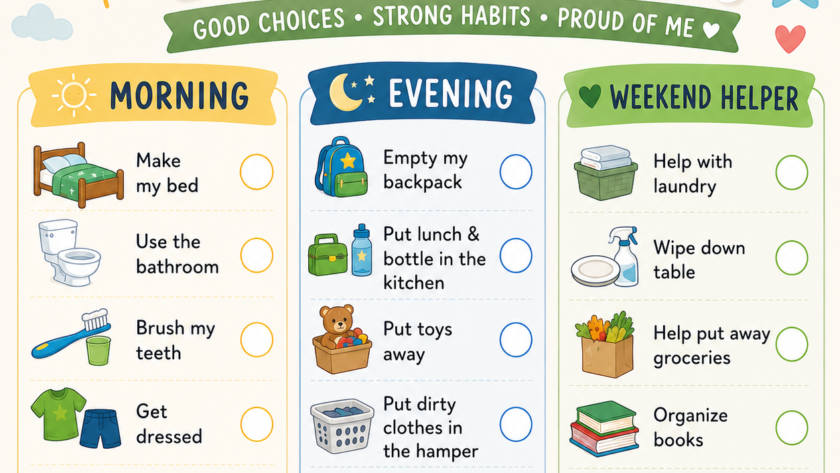
That question inspired me to create visual routine charts designed for young children. Each task has a simple picture and a short word prompt. The pictures guide him through the routine, while the words provide extra practice with early reading and sight-word recognition.
The goal isn’t perfection or expecting him to get ready entirely by himself. It’s giving him a clear guide so he can practice doing more independently and feel proud of his progress.
What’s Included in Our Kindergarten Routine
I divided our routine into three manageable sections.
Morning Routine
Our visual morning checklist includes:
- Getting dressed
- Making the bed
- Brushing teeth
- Eating breakfast
- Putting dishes away
- Packing the backpack
- Putting on shoes
Following the same order each morning helps him understand what comes next without needing constant reminders.
Evening Routine
A smoother morning often begins the night before. Our evening routine includes choosing clothes, putting away toys, preparing the backpack, brushing teeth, reading together, and getting into bed on time.
Having his clothes and backpack ready removes two possible sources of morning stress.
Weekend Helper Routine
Our Weekend Helper chart includes simple responsibilities such as making the bed, organizing books, picking up toys, wiping the table, and helping put away groceries.
These aren’t difficult chores. They’re small opportunities to practice responsibility, contribute to our household, and build confidence.
Why Visual Routine Charts Help
Young children may not be able to read a complete checklist yet, but they can recognize pictures and remember familiar patterns.
When my son sees a toothbrush, he knows it’s time to brush his teeth. When he sees a backpack, he knows it’s time to make sure everything is packed. The short word beneath each picture also helps him connect the image with the written word.
Predictable routines create confidence.
Confidence encourages independence.
And independence helps children feel proud of what they can accomplish.
When to Start a Kindergarten Morning Routine
Like any new habit, routines take practice.
That’s why we’re starting one to two weeks before kindergarten rather than waiting until the first morning of school.
Practicing early gives us time to see which steps he remembers, where he still needs help, and whether we need to change the order. By September, the checklist should feel less like something new and more like a normal part of his day.
We’ll begin by walking through it together. As he becomes more comfortable, I’ll gradually step back and allow him to take the lead.
Some mornings will go smoothly, and others probably won’t—and that’s okay. The purpose is to make our days more manageable, not create another reason to feel stressed.
Don’t Forget About the Weekends
Weekends don’t have to mean abandoning every routine we’ve worked to build.
We can sleep a little later, play more, and enjoy family time while keeping a few simple responsibilities. When children continue practicing these habits on weekends, Monday morning feels less like starting over.
The goal isn’t to fill the weekend with work. It’s to maintain just enough structure for helpful habits to feel natural.
Rewards Don’t Have to Cost Money
Rewards can celebrate consistency without paying a child for every completed task.
Some of our favorite low-cost or free ideas include:
- A special Saturday breakfast
- Choosing dessert after dinner
- A surprise trip to the park
- Movie night with blanket forts and popcorn
- Family game night
- Staying up 15 minutes later on Friday
- Choosing the next family adventure
The memories created through these experiences will last much longer than another toy.
A Few Helpful, but Optional Favorites
You don’t need to buy anything special to create a successful routine. However, a few items may help:
- A child-friendly color-changing alarm clock
- A toothbrush or visual timer
- Low hooks for backpacks
- Picture labels for drawers and bins
- A dry-erase or magnetic checklist
- A basket for nightly reading books
I’ll link some of our favorite options below for anyone looking for ideas.
Disclosure: I may earn a commission if you purchase through the links below, at no extra cost to you. As an Amazon Associate I earn from qualifying purchases.
Kids Alarm Clock, Ready to Rise Children’s Sleep Trainer
Wireless Battery Powered Timer for Kids
Command 15 Lb XL Heavyweight Wall Hook
2-in-1 Visual Timer with Task Board, to-Do List, Checklist
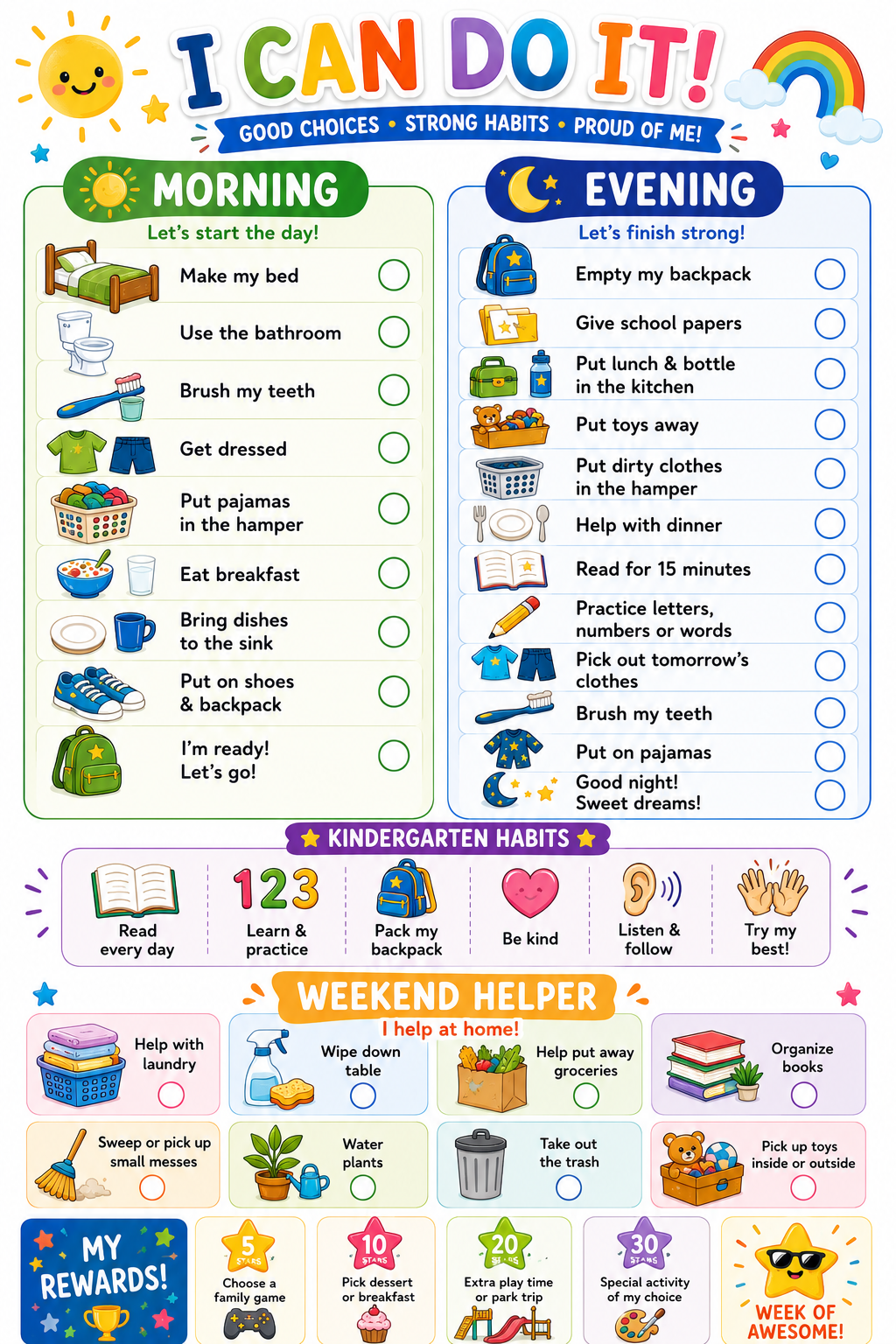
I created visual morning, evening, and weekend routine charts for young children who are learning to follow routines and become more independent.
Each task includes a picture and short word prompt, making the charts easier for early readers to understand.
Print them, place them in a picture frame, or laminate them and use a dry-erase marker to check off each task.
One Routine at a Time
If there’s one thing I’ve learned as a parent, it’s that we don’t have to change everything overnight.
Start with one routine.
One habit.
One visual chart.
One week of consistency.
And while I’ll probably cry when I watch my little boy walk into kindergarten, I know we’re giving him more than a checklist.
We’re giving him confidence, independence, and the tools to believe:
“I can do it.”
And that’s a pretty amazing way to start school.